
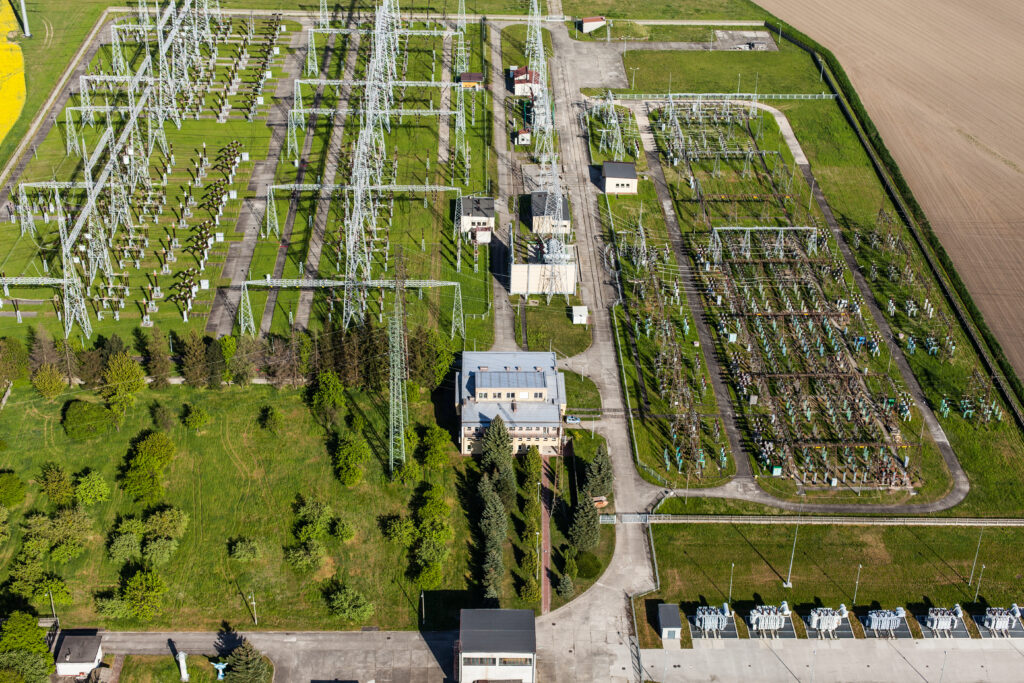
Powered land is land with a secured, credible path to electricity at the capacity and on the timeline a project requires. It has become the single most valuable attribute in industrial and data center real estate, because a site without a path to power is a site that cannot be underwritten.
For most of the past two decades, site selection followed a familiar hierarchy. Fiber routes, land cost, tax treatment, workforce availability, water access, and entitlement risk drove the decision. Power was assumed. A developer identified the parcel, then worked with the local utility to bring service.
That hierarchy has inverted. Across the highest-demand markets in North America, power availability now determines whether a parcel is developable at all. The result is a new asset class in the market vocabulary: powered land.
What Powered Land Actually Means
The term gets used loosely, which creates risk for buyers. A parcel marketed as powered land may mean any of several very different things:
- Energized today. Existing service at the required capacity, already delivered to the site.
- Contracted capacity. An executed utility agreement with a defined megawatt allocation and a target energization date.
- Queue position. A place in an interconnection study process, with capacity and timing still subject to study results and upstream upgrades.
- Generation ready. Gas access, acreage, emissions headroom, and permitting conditions that support onsite generation independent of transmission timing.
These four categories carry profoundly different risk. A queue position is an application, not an allocation. Diligence on powered land should begin by establishing which category a site genuinely occupies and what documentation supports the claim.
Why Power Became the Gating Variable
Several structural forces converged at once. AI training and inference workloads arrive in large, concentrated increments. Electrification and reshored manufacturing are adding industrial load. Generation and transmission projects move through study, permitting, and construction cycles measured in years.
None of this reflects a failure by utilities. Utilities are managing an extraordinary volume of large-load requests inside regulatory frameworks designed for a slower growth curve, and they are building. The constraint is simply that the planning cycle and the commercial cycle no longer run at the same speed.
Research from Lawrence Berkeley National Laboratory has documented sustained growth in interconnection queue volumes and the time required to clear them. For a developer, that research translates into a practical point: a parcel’s value is now a function of how quickly electrons can legally and physically arrive.
How Onsite Generation Creates Powered Land
The most direct way to make a site power ready is to generate power on it. Onsite generation converts a transmission-dependent parcel into one with its own path to energization.
When Stella Power evaluates a site for power readiness, the analysis centers on a handful of conditions:
- Fuel access. Proximity to pipeline infrastructure, available pressure, and the lateral work required to reach the site.
- Emissions headroom. The airshed, applicable permitting thresholds, and the control technology required to stay inside them.
- Footprint. Usable acreage for generation and any paired storage, positioned so power does not consume the revenue-generating envelope.
- Utility posture. How the local utility treats behind-the-meter generation, standby service, and future interconnection.
- Load profile. The shape of the demand the site is being developed to serve, now and at full buildout.
A parcel that scores well against those conditions can be made power ready on a development timeline rather than a transmission timeline. That is a materially different underwriting proposition.
Powered Land Changes the Financial Model
Power readiness affects more than schedule. It affects valuation, financing, and leasing.
A developer who can commit to a firm energization date can sign tenants against that date. A colocation or wholesale operator selling capacity is selling a commitment, and a commitment is only as strong as the power behind it. Lenders and investors underwrite to in-service dates. When that date is credible, cost of capital and deal velocity both improve.
This is why onsite generation increasingly appears in diligence not as a contingency but as the primary power plan, with utility service positioned as a future complement rather than a prerequisite.
Questions to Ask Before Buying Powered Land
Which of the four power-readiness categories does this site actually occupy, and what document proves it?
- If capacity is contracted, is the date firm, and what are the remedies if it moves?
- What upstream upgrades are required, who pays for them, and when were they last studied?
- Does the site support onsite generation on fuel, emissions, and footprint?
- What is the full-buildout load, not just phase one?
Sites that answer these questions cleanly command a premium for good reason. Sites that cannot are carrying schedule risk that will eventually surface in the pro forma.
The Market Is Repricing Certainty
Powered land is not a passing label. It reflects a durable repricing of certainty in infrastructure development. Land is abundant. Capital is available. Equipment, permits, and energization timelines are the scarce inputs, and the market is assigning value accordingly.
The developers moving fastest are the ones who stopped treating power as a utility question and started treating it as a development discipline. Stella Power works with landowners, developers, and operators to evaluate power readiness early, structure onsite generation where it fits, and convert raw acreage into sites that can actually be built and energized on schedule.
Key Takeaways
- Powered land means a credible, documented path to energization at the required capacity and timeline.
- The label covers four very different conditions: energized, contracted, queued, and generation ready.
- A queue position is an application, not an allocation. Diligence should establish which category applies.
- Onsite generation can create power readiness on a development timeline rather than a transmission timeline.
- Power readiness drives valuation, financing cost, and the ability to commit dates to tenants.
Frequently Asked Questions
What is powered land?
Powered land is a parcel with a secured and credible path to electricity at the capacity and on the schedule a project requires. In practice it can mean energized service, contracted utility capacity, an interconnection queue position, or conditions that support onsite generation.
Is a utility interconnection queue position the same as powered land?
No. A queue position is an application in a study process. Capacity, cost allocation, and timing remain subject to study results and any upstream upgrades identified. It carries materially more risk than contracted or energized capacity.
Can onsite generation make a site power ready?
Yes. Onsite generation gives a site its own path to energization that is independent of transmission timing. Feasibility depends on fuel access, emissions headroom, available footprint, utility posture, and the load profile the site must serve.
Why is power readiness affecting land value?
Because schedule certainty is now the scarce input in data center and industrial development. A site that supports a firm energization date can be underwritten, financed, and leased against that date, which raises its value relative to sites that cannot.
